CLE Webinars vs. On Demand CLE

Most states permit attorneys to complete continuing legal education requirements through online channels. Digital CLE presents an effective strategy for positioning your legal practice as an authority in specific subject areas.
Providers can deliver online CLE in two primary formats: live webinars or recorded videos available anytime. Each approach has distinct advantages for delivering quality educational content, though selecting the appropriate format depends on your program objectives.
CLE Webinars
Live webinars are real-time online events scheduled for specific dates and times. Attorneys register in advance to receive notifications when the presentation begins.
These events serve as valuable marketing instruments, shareable via email campaigns and social platforms. The scheduled nature generates time-sensitive motivation -- participants must attend at the designated moment, as most webinars air only once. However, this constraint limits attendance, as many attorneys face scheduling conflicts.
Live formats enable interactive elements; presenters can respond to audience inquiries and foster engagement. Unfortunately, this interactivity comes with limitations. Webinars typically max out at one hour, as holding attorney attention for extended periods proves challenging.
Zoom Webinars and GoToWebinar represent popular platforms, though neither was purpose-built for CLE requirements. This means manual verification of attendance and certificate distribution may be necessary.
Webinar Pros and Cons
Advantages:
- Creates urgency encouraging real-time participation
- Facilitates audience interaction
Disadvantages:
- Time constraints may reduce attendance figures
- Extended sessions beyond one hour prove difficult to sustain
On Demand CLE
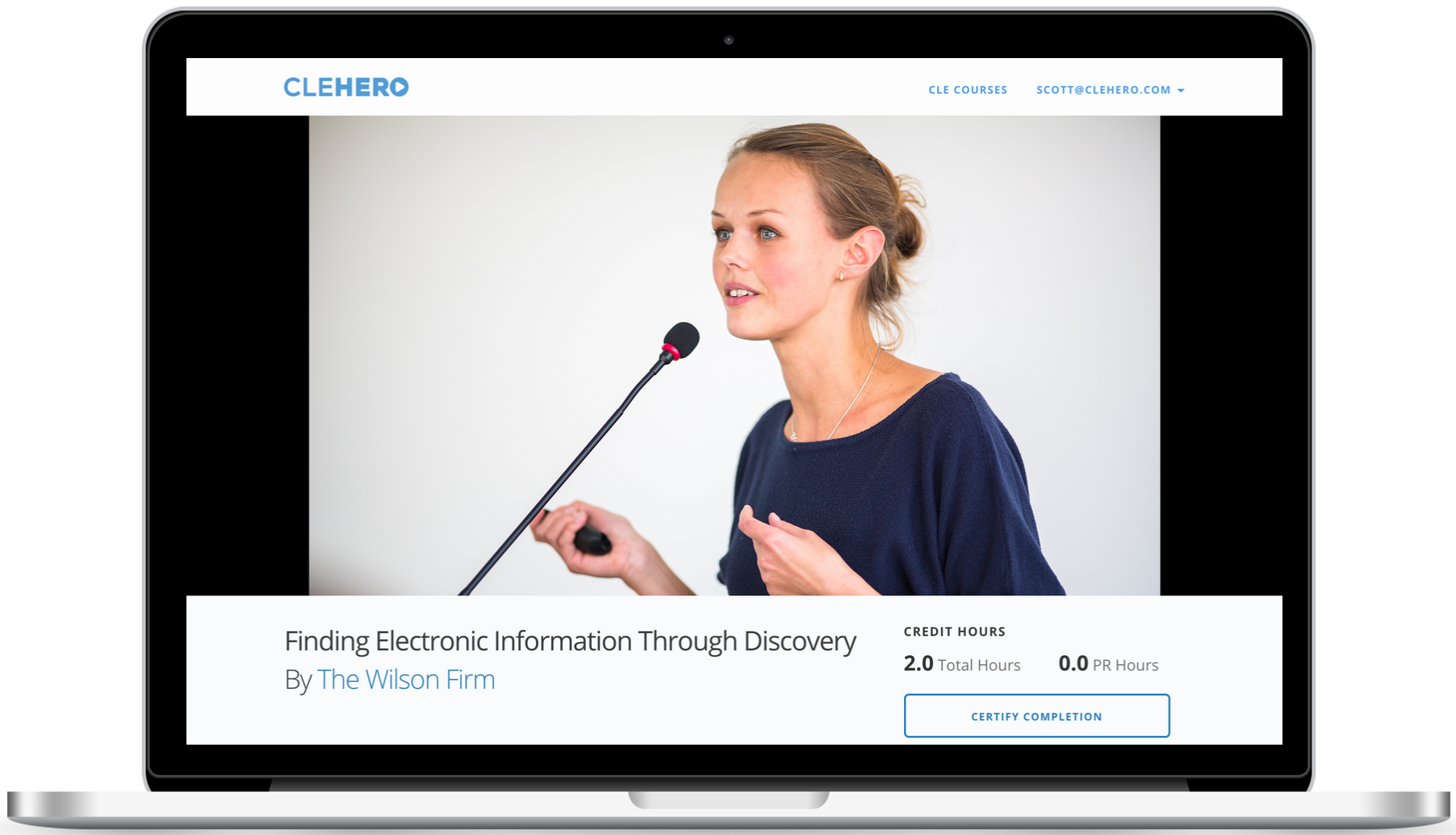
On-demand CLE allows attorneys to access content whenever convenient -- comparable to Netflix for legal education.
Participants typically log into a platform to view programs, with the system tracking viewing activity. This tracking enables providers to certify completion automatically.
Like webinars, on-demand offerings function as marketing assets, promotable through emails, websites, and social channels. Since these courses lack predetermined air times, promotion can continue indefinitely while credits remain approved.
You may post any approved recorded video as on-demand content, including recordings from in-person seminars or past webinars. Recording your programs creates a reusable asset. If not currently recording events, explore our guide on How to Record Your CLE Programs.
Dedicated CLE software platforms work better than general video sites like YouTube, which cannot confirm viewing completion. This gap creates potential compliance issues based on state regulations.
CLE Hero provides specialized on-demand CLE software that hosts videos, manages viewing data, and automatically generates completion certificates.
On Demand Pros and Cons
Advantages:
- Attorneys access content at their convenience
- Supports lengthy, detailed content consumed over time
- Specialized platforms like CLE Hero automate viewing tracking and certification
Disadvantages:
- Confirming completion requires appropriate technology infrastructure
Combining Both Approaches
Providers need not choose exclusively between formats. Combining both methods maximizes reach and effectiveness.
You can conduct a live webinar to leverage urgency and interaction benefits, then record and repurpose that content on an on-demand platform. This strategy allows busy attorneys to engage with material they missed during the live broadcast, expanding your audience significantly.
Both delivery methods offer meaningful ways to connect with legal professionals. Select formats that align with your goals to maximize program accessibility and impact.